Thursday, June 27, 2013

Going to Gettysburg....

Not quite.  I did not make it to the Mecca of reenacting this year for the 150th Gettysburg. Oh well, there are more things ahead. However, I did send my sweet husband to parade on the grounds that North Carolina soldiers so bravely fought. The week before the event was full of prep, not as much as I would have  hoped, but do to the lack of a good kitchen and some family issues, I think I did fairly well. Three loaves of great bread (there were 4, but it just had to be tried before I sent it off), a double batch of pumpkin muffins.

I used my trusty go-to bread recipe. Although, this time I did not bake them in pans, since most of my stuff is still packed up, but they still turned out nice! 

I have to admit, I did cheat on the pumpkin muffins. I used a box mix that I had anyway- and there is a chance that you would still be using what is left of the winter vegetables in addition to the new summer ones!

The breads were wrapped in paper the placed in a japanned cake tin. The muffins were placed in a paper-lined lidded basket. 

Of coarse, there needs to be other things to eat.... I guess you could eat bread and muffins for four days. 
Food before packaging. 
I have previously posted about packaging food for camp use. This is how the variety of foods were originally packed.  In most cases it is better to package foods in period containers. These can be very simple, to very elaborate. 
Food after packaging
I use a variety of packaging options. The cheapest option is making poke sacks in a variety of sizes. Another cheap option is buying paste board boxes in a variety of sizes, these are available in many shapes & sizes at craft stores. The two small pasteboard boxes in this photo contain the tea & lemonade in the previous picture. The large black tin contains three loaves of bread. The small black tin contains sugar (this was a Christmas tin, I "japanned" by painting it black). The jars are full of pickles & pickled eggs. 

The packaging of food before an event prevents you from having to hide food before and during food-prep. 


Saturday, May 4, 2013

Common Egg Bread

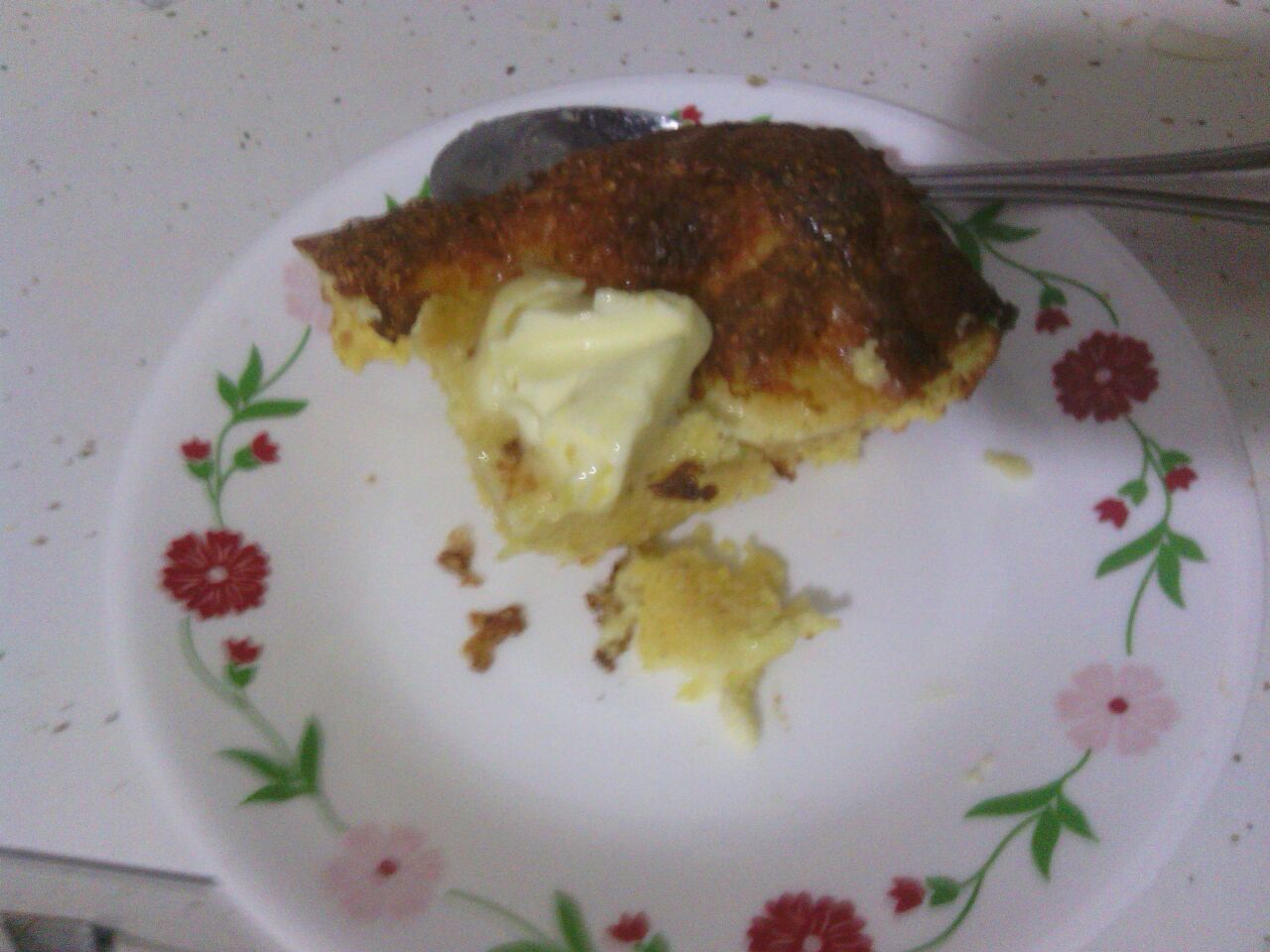
Common Egg Bread, The Kentucky Housewife, 1839.  This sounded very similar to a dish that we had eaten on our honeymoon in Williamsburg, so when I was browsing books for new ideas, I tagged it as a must try!

I used my new birch-twig whisk for this recipe, I must say it is nice. After beating the eggs well, add 4 cups of milk, salt and butter- I used 2 tablespoons.
The fine Indian meal (corn meal) is where it gets tricky.  Like most mid-century recipes there are no exact measurements. I ended up using about a pound of corn meal to make "a good batter".  It will be a thin batter, I guessed on this part, as it did not specify to what consistency this batter should be.
In a 400* oven it took about 24 minutes to get done.

The top looks similar to eggs that have been cooked a little too long, but it is a nice brown "done" color. It will smell just like corn bread! 


After letting it cool for a few minutes, I served my self a piece with butter- as directed! 
It was still pretty hot, but had a nice corn-bread taste. I think I may have used too much corn meal, as it did not have the light eggy taste I was looking for. Next time I will use less corn meal to see how the results vary. 

Thursday, May 2, 2013

Don't You Just Love New Things?

I like to share when I get new things- and share where to get them!! I usually browse through local Thrift & Antique stores at least once a month looking for hidden treasures for good prices. I have lucked out a few times, here are some of my findings!!

Looks great right? Almost all of it was found at local Antique markets. Some were bought new. This is a great example of how you can mix old and new to get the perfect mix of what you need. 

The two baskets were bought together for just $11!! They both have lids, and nestle for easy storage. They are the perfect size for small cakes, cookies, biscuits, etc. The lids will be helpful in keeping out bugs, dirt, etc. during events. 

The bundle of twigs (as my husband calls it) is a Swedish-made birch twig whisk. These whisks are supposed to be top quality with getting lumps out of gravy, I will have to test it and see. I bought this one from the Gift Chalet, you can get one too for just $12.00! 

The small pitcher holds about a cup and a half. I picked it up cheap thinking it would be good for cream or when you need just a splash of something on the table. 

The small jar is actually a mustard jar that can be bought from Jas Townsend and Son.  I had never ordered anything like this over the internet, and I wanted to see the quality, so I got a small little jar to use for mustard, or honey, or molasses.  I will say that I think it is quite cute! I may order more pottery items from Jas. 
Detail of design near handle.

The best item in my new stash is my salt-glazed jug. It was a great surprise from my sweet husband. I have been wanting one for a while, but I have never brought myself to actually buy one. I have not measured how much it will hold, but I am thinking close to a gallon. This will be great to have along for those one-day events when you don't want to haul around a lot of stuff. 

More recipes coming soon!! I am currently trying to decide what to make next, I have a list!!! We are still in the process of packing, so I see it being something fun & easy!!


Wednesday, April 17, 2013

"Not When It's Hot!"- No Fire Food

As Spring rolls through, we know that summer will be just around the corner. While we do look forward to the warmer temperatures and the blooming flowers, most of us do not want to bend over an open fire all day in order to feed our living history crowd. So what do we do?
Luckily there are options!
Bread- Try to pre-bake ahead of the event- Bread, Biscuits, cakes, cookies, etc. These can be made in the off-season and stored in the freezer until the even (this will also keep your house from getting hot)
Fruit-Fresh, seasonal fruit is a great option for summer months. Apples, oranges, watermelon, peaches, berries- these will also help keep hydration levels up!
The Virginia Housewife, 1838

Vegetables- Fresh produce is a wonderful thing to have a basket of. Pick & chose what is wanted at a time- eat cucumbers, tomatoes, celery alone or on sandwiches. Try some salads with a nice vinaigrette  These are nice alternatives to "heavy foods" and will keep you full without that "sick" feeling. Also, keep some pickles around! These are also great to throw in a salad or to snack on, plus the vinegar content keeps electrolytes happy!
Meats-Cold ham, cold roast chicken, summer sausages. Pre-cook ham & chicken before the event, then enjoy it cold as a main dish, on a sandwich, or as a topping on salad.
Beverages- Water, water, water!!! I can't say it enough! Drink water! Try to stay away from the sugary alternatives (Gatorade,etc.). Drink even when you do not think you need it, start hydrating before events. Start drinking plenty of water a few days before the planned summer event.  Lemonade is also quick & easy to make at events. Fruit waters were also found in the period (strawberries, mmmmmm). Another option is Switchel- (1 gal. of water, 2 cups sugar, 1 cup molasses  1 cup vinegar, 1 tsp ginger). Switchel is used to replace & replenish what the body has lost (think modern sports drinks), but the ingredients are all natural!
Ice Cream- There are numerous references to "ices" and "creams". Enjoy a nice fruit-flavored ice cream to keep cool!


Thursday, April 11, 2013

Pleasing a Picky Palatte

We all have seen them, we have them in our family, we may even be one ourselves....a picky eater. While being particular about what you eat may deter you from packing period food for a fun weekend of living history, but it shouldn't. The 19th Century offers a variety of foods that are sure to please almost any palate. Sure, it may not be the most nutritious for two days, or even have the most variety, but who cares if you eat nothing but apples & bread for the weekend? I spent a week last summer eating almost nothing but tomato sandwiches, but I digress. Below is a listing of simple foods. There should be enough on the list to compose a nice picnic-style menu for the weekend!
  • Breads- Homemade or from a local bakery. Rolls, biscuits, etc. You really can't go wrong with a bread. This can be a staple for the weekend. It does not need to refrigerated and keeps for a while. You can also make your own if you have any dietary restrictions (ex. Celiac disease).
  • Cheese- Again, a variety is appropriate. Stick to the harder cheeses so they will not melt or become too soft during an event. (Leave that cooler at home, you won't need it!) 
  • Eggs- You can't beat fresh eggs! You can cook these a variety of ways- fry, boil, scramble, poach, make egg salad- the ideas are endless. Try to get fresh eggs that have not been refrigerated so they will keep the weekend without needing refrigeration- put them in a nice basket for storage & a nice display item in camp! 
  • Nuts- Looking for another source of protein? Pecan, almonds, walnuts, peanuts, etc. They are great for snacking too!
  • Fruits- Fresh, seasonal fruits are another wonderful option. Strawberries, pears, apples (can use these most of the year), peaches (fresh or canned!).
  • Vegetables- Fresh & seasonal, the summer months are full of them! Tomatoes, corn, carrots, onions, cucumbers, radishes, celery, potatoes (fry, boil, mash).Choose a variety to snack on or throw in a pot for a great stew or soup! Root vegetables can be used almost all year! 
  • Mac & Cheese- yes, that's right, Kraft did not invent this favorite dish- See the recipe here
  • Pickles- The 19th century is known for the variety of pickled items. Try cucumbers, eggs, peaches (yes, peaches, they are not that bad!). The vinegar will help keeping electrolytes happy.
  • Condiments- add some flavor to the basics. Jams, jellies, butter, honey, molasses. 
  • Cakes & Cookies- These are sure to please the sweet-tooth in the crowd. Ginger cakes, molasses cookies, macaroons, shortcake, pound cake. 
You may have noticed that I composed this entire list as a meat-free menu! Pretty impressive! However, if you find yourself just at a loss without meat on your plate, fear not. 
  • Fish- fresh caught, easy to cook. 
  • Pork- One thing that is found over & over again in a 19th Century diet- salt pork. Also try ham & sausages. 
  • Chicken- Cook it any way you want. Roast it over the fire, boil, fry, add to a stew. A little can feed a lot! Use any leftovers to make a nice chicken salad for a Sunday lunch. 
  • Game meat- if you have any family or friends that hunt, chances are they may have an extra haunch of meat that you can have. Cook as desired. 
This list, sans meat, can travel easy without needing refrigeration. Remember to always package food in a period way as to not have to mess with plastics during an event. Bags, crockery, paper, boxes, etc are all period uses to store foods. 

Hopefully, this list can give you some ideas for composing a nice meal to solidify a good impression. 

Tuesday, April 9, 2013

Salads for the Season

Since I am in the middle of packing & moving,  I will offer a sampling of recipes  rather that my attempt at them. I promise, I will get back to cooking soon!  Below is a sampling of salads from the 19th Century.  With the weather warming up and the farmer's markets opening, it is a great way to use up all of those fresh  veggies that will be on our plates soon.


*I may actually make this sometime soon! So easy!!* 


These are a few salads to bring you some spring cheer! Stay tuned for more posts on spring foods! 

Tuesday, April 2, 2013

Cooking in Camp Part 2

Part one can be found here.
The menu is planned, the food is packed. What do you cook on?  Copper? Tin? Cast iron? Yes. I use all three. More copper and cast iron than tin (it rusts so easy!). I have been able to get some cheap copper pots & pans at thrift stores and antique stalls. Cast iron is my go-to. I use it at home, I use it in camp. Cast iron is almost indestructible, which helps in a camp situation. I absolutely love cooking on my cast iron! It holds heat very well, and is easy to clean ( another camp plus)! Copper & tin do have their advantages in that they are lighter and easier to carry. Tin tends to rust easily if you do not take care of it.

Serving dishes can also be tricky when in a camping situation. I'm sure at some point we all want to make a pretty table with pretty china dishes, however, we have to look at practicality. Those of us who do cook in a camp setting usually do not have space for such, though it would be nice. China items are far too breakable to haul around, but if you find some appropriate ones for .25 at the goodwill, you won't be upset if they get broken. I tend to use ironstone and some wood pieces. I have lucked up and have been able to get some good iron stone cheap, either at yard sales, discount stores, etc. Wood serving dishes are another option. These can be over-used I think in some cases. I like to serve bread on my large wooden cutting board after cutting it. Sometimes I use small wood bowls for veggies, nuts, etc. Luckily a lot of places are starting to make/sell reproduction pottery pieces. While I love to use pottery, I also feel like I need to be careful while transporting it. I have had pieces get cracks, like my Williamsburg mug :(. Again, look in thrift stores, yard sales, even some antique markets have great, cheap finds!
Variety of dishes used in camp cooking

When it comes time to eat the meal, I depend on "the guys", or whoever I am feeding, to provide their own utensils. I keep a few extra bowls & forks around for those who are just starting out.  I usually serve soup/stew right from the pot on the fire so that it stays warm. Sides like potatoes, salad, fruit, veggies, cheese, bread, etc. are usually self-serve "buffet-style" on a central table. There is always water & lemonade available as well!  I try to keep camp meals simple, but still add variety. When feeding a large crowd, everyone has different tastes and there is no way to please everyone, but variety helps everyone get their fill!

Clean-up. The dreaded four-letter word...clean..... Well, we all have to do it. I try to keep hot water going all day for easy clean-up. If there are a lot of people eating, I have made "the guys" clean their own dishes. I provide the basins, water, soap, and towels, they provide their labor to clean their dishes.  I combine leftovers for mid-afternoon grazing. Usually leftovers are placed on the cutting board (bread, cheese, etc.) and a towel over them to keep fly's off.  Cast iron pots & pans are cleaned with boiling water and good wipe down with oil so they are ready for next time.


So, cooking in camp may seem like a big responsibility, but its not! Just take your time and remember, provide a variety of simple foods! Bake ahead of time & package everything before you leave home so you do not have to hide modern wrappings.

Happy cooking!!!